
English| EUR
Suggested for you
More currencies
Choose a language
The route between Kanazawa and Takayama crosses the heart of the Japan Alps through a single highway corridor that threads between mountain ranges and passes directly through Shirakawa-go. Most travelers use the dedicated express bus service that runs multiple times daily, with the option to break the journey at the UNESCO-listed gassho village. The logistics are straightforward once you understand the three-stop structure and the reservation rules that govern seats during peak travel windows.
Quick answer
The Kanazawa to Takayama route is served by direct Nohi express buses that run 5-7 times daily, with journey time of approximately 2 hours 15 minutes to 2 hours 30 minutes depending on the service. Most departures stop at Shirakawa-go (roughly 75 minutes from Kanazawa, then 50 minutes onward to Takayama), allowing travelers to break the journey for a village visit before continuing on a later bus—though seat availability on the onward leg is not guaranteed during peak seasons without advance reservation.
The highway that connects Kanazawa and Takayama was completed in 1976, and for five decades it has remained the only practical overland link between the Hokuriku coast and the Hida highlands. No train line crosses this section of the Japan Alps. The express bus service along Route 156 and the Tokai-Hokuriku Expressway carries nearly all passenger traffic between the two cities, operating year-round despite winter snowfall that can exceed three meters in the mountain passes. Understanding how to get from Kanazawa to Takayama begins with recognizing that Shirakawa-go sits almost exactly midway along the route. The village is not a detour—it is a scheduled stop on every service. Travelers boarding in Kanazawa may alight at Shirakawa-go, spend several hours walking the thatched-roof hamlet of Ogimachi, then board a later bus to complete the journey to Takayama. The challenge lies not in the routing but in seat inventory: buses departing Takayama or Kanazawa often fill to capacity during daylight hours, and a traveler who disembarks at Shirakawa-go without a reserved onward ticket may find themselves waiting for the next available service with open seats, which in high season can mean a delay of several hours or a sold-out day. The Kanazawa-Takayama travel corridor sees its heaviest use during autumn foliage season (October through early November) and during the winter illumination events at Shirakawa-go (January and February). Reservations open one month in advance through the Nohi Bus website and Japanese convenience-store terminals. Same-day standby tickets are issued at bus terminals on a first-come basis if seats remain after reserved passengers board, but availability is unpredictable on weekends and holidays. For travelers planning a Shirakawa-go stopover, the village itself operates on predictable rhythms. Most gassho houses open to visitors from 08:00, and the last express buses toward Takayama depart Shirakawa-go around 16:30 to 17:00 depending on season. The village can be toured in two to three hours, though many visitors allocate four to five hours to include a walk to the Shiroyama Viewpoint, lunch at a soba restaurant, and entry to one or two of the preserved farmhouses that charge separate admission fees. The route between Kanazawa and Takayama remains the most direct way to experience both the alpine townscape of Takayama and the architectural heritage of the gassho-zukuri without retracing your path or adding a multi-day detour. Weather disruptions are rare but not unknown. Heavy snowfall occasionally forces temporary closures of the Tokai-Hokuriku Expressway between December and March, typically for a few hours until plowing is complete. The bus operators post real-time service updates on their websites, and alternate routing via longer prefectural roads adds roughly 40 minutes to the journey. The corridor remains the backbone of regional transport, carrying not only tourists but also local commuters, school groups, and freight between the Hokuriku and Hida regions.
“The highway that connects Kanazawa and Takayama was completed in 1976, and for five decades it has remained the only practical overland link between the Hokuriku coast and the Hida highlands.”
The most efficient way to travel between Kanazawa and Takayama is by highway bus, which provides a direct connection with a mandatory stop in Shirakawa-go. This route allows travelers to traverse the mountainous region of Gifu Prefecture using the Hokuriku Expressway and E41/Tokai-Hokuriku Expressway.
Nohi Bus or Hokutetsu Bus from Kanazawa Station to Shirakawa-go
Nohi Bus or Hokutetsu Bus from Shirakawa-go to Takayama Nohi Bus Center
Arriving between 08:00–16:30 ensures adequate time to explore the Ogi-machi village area and manage return bus connections before evening.
The best arrival window is 08:00–16:30, as arriving early helps avoid peak tourist crowds and ensures time for return bus connections. Visiting during shoulder months provides a balance between manageable visitor volume and accessible mountain travel.
—
Early arrivals experience the village before day-tripper buses arrive from Kanazawa and Takayama.
Mild, 10°C to 20°C
Spring weather offers clear skies and pleasant temperatures for walking between historic farmhouses.
Cool, 8°C to 18°C
Autumn colors provide clear visibility of the landscape, though evenings require layered clothing.
Cold, -5°C to 5°C
January and February feature snow-covered roofs, though transit times may fluctuate due to winter road conditions.
Verdict: Tuesday to Thursday, arriving at 08:00, during the months of April or October provides the most reliable experience.
This plan suits travelers breaking the Kanazawa–Takayama journey with a half-day stop in Shirakawa-go. The full trip takes roughly 7–8 hours including village exploration and transit.
Board the direct Nohi or Hokutetsu bus from Kanazawa Station. The ride to Shirakawa-go takes around 75 minutes through mountain scenery.
Disembark at the main bus stop in Ogi-machi. Store luggage in coin lockers near the stop if traveling with bags.
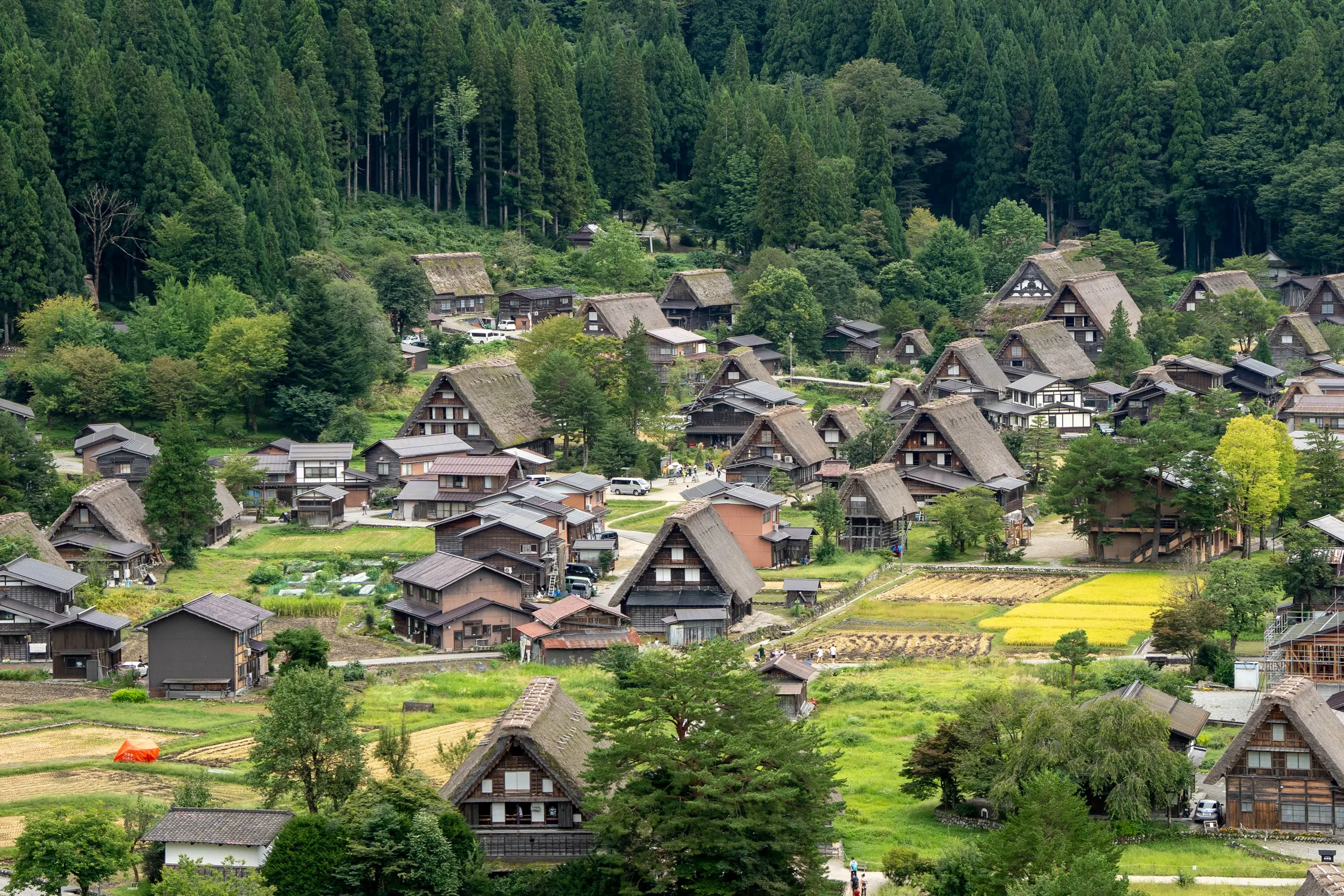
Stroll the central district to see gassho-zukuri farmhouses, rice paddies, and the canal paths. Most iconic houses cluster within a 15-minute radius of the bus stop.
Hike or take the shuttle up to the hilltop observation deck for the classic aerial view over thatched roofs. Allow 20–30 minutes total.
Grab a set meal at a village restaurant, then tour one or two open-house museums. Each house takes roughly 15 minutes.
Catch an afternoon departure; the Shirakawa-go–Takayama leg runs about 50 minutes. Confirm your seat reservation in advance during peak seasons.
Check into accommodation or begin exploring the old town, which lies a short walk from the bus center.
Shirakawa-go is open to visitors daily throughout the week. Planning your stopover within these established hours ensures access to the village facilities during your travel from Kanazawa to Takayama.
Prepare these items before your journey to ensure smooth connections and avoid sold-out buses during peak travel periods.
Everything you need to know about how to get from kanazawa to takayama
The most efficient way to travel is by highway bus, which provides a direct connection between the two cities. This route is highly recommended because it is cost-effective and avoids the transfers required when traveling by train.
No, there is no direct rail line connecting these two cities. To travel by train, you must first take the Shinkansen to Toyama and then transfer to the Limited Express Hida train, which is a longer and more complex process.
Yes, because this is a popular route, buses often sell out, especially during peak seasons. We strongly advise booking your seat on the highway bus in advance to ensure your preferred departure time.
Many travelers stop at the village as part of their journey since it lies directly on the bus route. The village is open daily from 08:00–17:00, and arriving early in the 08:00–16:30 window helps you avoid the biggest crowds.
The nationwide Japan Rail Pass does not cover this bus service. However, the Takayama-Hokuriku Area Tourist Pass can cover the route, though advance reservations for specific bus departures are still required.
Most highway buses have space for luggage, but policies can vary by operator. Since space is limited and shared with other passengers, it is best to pack light and check specific luggage dimensions with the bus company if you have oversized items.