
5 hr
Shirakawa-go UNESCO Village Morning Tour from Kanazawa
Discover the UNESCO-listed gassho-zukuri village with a guided walk, local tastings, and scenic mountain views
Reserve
Hand-picked by our editors — only the best 5 experiences from 47 reviewed.
Verified partners for every tour, free cancellation where available, and instant confirmation on every booking.
5 hr
Discover the UNESCO-listed gassho-zukuri village with a guided walk, local tastings, and scenic mountain views
Reserve
9 hr
Journey to a World Heritage mountain village, craft traditional sweets, and explore historic gardens
Reserve
11 hr
Journey through three UNESCO-protected mountain towns showcasing traditional architecture and Edo-period charm
ReservePrices from verified partners. Availability updates in real time at checkout. Free cancellation policies apply where shown.
The landmarks, rooms, and views travelers on this tour remember — all visible on a single visit.
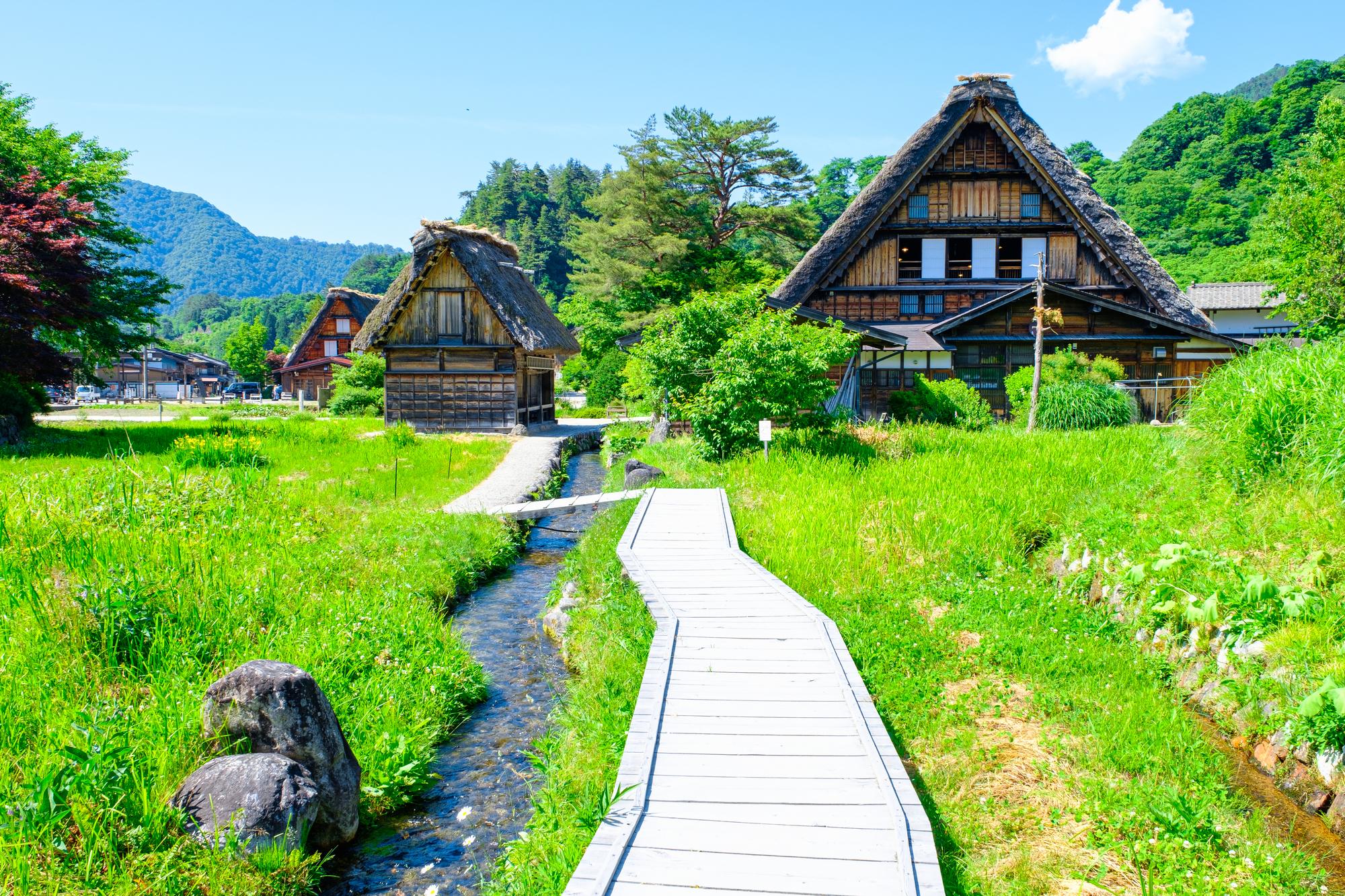
This house is the largest in the village and a designated Important Cultural Property. It features a massive thatched roof and offers insights into the traditional silkworm industry.
Shirakawa-go offers a highly developed experience with comprehensive infrastructure, whereas Gokayama provides a more intimate and secluded encounter with traditional gassho-zukuri architecture; most visitors who prioritize ease of access prefer a kanazawa to takayama bus tour.
| Feature | Top pick Shirakawa-go | Gokayama |
|---|---|---|
Village Size |
Larger, multiple districts | Smaller, compact clusters |
Commercial Development |
High, numerous shops and cafes | Low, limited local services |
Crowd Density |
High, frequent peak times | Low, quiet atmosphere |
Accessibility via Bus |
High, regular direct routes | Moderate, requires local transfers |
Traditional Atmosphere |
Preserved with tourist-focused amenities | Preserved, rustic and tranquil |
Entry Fee |
0 JPY | 0 JPY |
| See tickets → |
Verdict: Select Shirakawa-go if you require seamless travel logistics for your kanazawa to takayama bus tour tickets, or choose Gokayama for a quiet, authentic immersion in the region's UNESCO heritage architecture.
Choose your ticket, select your date, and reserve in under two minutes. Secure checkout handled by our verified partner.
Instant confirmation by email, with a mobile voucher you can save offline. No printing, no queuing at a collection desk.
Arrive at the entrance, show your voucher on your phone, and walk in. Most tickets include priority or skip-the-line access.
Practical details for your visit straight from our verified partners — hours, access, rules, and how to get there.
Ogimachi, Shirakawa-mura
Main arrival point for most coach services.
Nohi Bus and Hokutetsu Bus provide regular services between Kanazawa, Shirakawa-go, and Takayama.
Wear comfortable walking shoes suitable for gravel paths and sloped terrain during your kanazawa to takayama bus tour. Dress in layers as mountain temperatures in Shirakawa-go can fluctuate.
Travelers on a kanazawa to takayama bus tour should keep luggage sizes compact as storage space on regional coaches is often limited. Large suitcases may need to be stored at station lockers in Kanazawa or Takayama.
Photography is permitted in outdoor areas of the village, but please respect privacy by not filming inside private homes. Drones are strictly prohibited throughout the Shirakawa-go historic district.
The main village roads are paved but may be uneven for wheelchairs or strollers during your kanazawa to takayama bus tour. Some historic houses have steep stairs that are not accessible to visitors with limited mobility.
Mobile reception is generally reliable, but ensure your device is charged for navigation. Public Wi-Fi is limited, so download any necessary maps before starting your kanazawa to takayama bus tour.
The village is educational for children, though parents should supervise them closely near irrigation channels. A kanazawa to takayama bus tour offers a chance to explore traditional gassho-zukuri architecture at a child-friendly pace.
Local snacks such as Hida beef skewers and mitarashi dango are available near the bus arrival area. Avoid eating while walking to keep the historic village streets clean.
Pets are generally not permitted inside the historic house museums. If traveling with a pet on your bus trip, check specific operator rules regarding animal transport.
As of 2026, visitors are encouraged to respect the local residents who still live in the traditional houses. Please remain on marked paths during your kanazawa to takayama bus tour.
Ogimachi, Shirakawa-mura
Main arrival point for most coach services.
Get directionsBest time to go, insider tips, nearby landmarks, and the cancellation fine print — flip through to skim what matters to you.
How crowds, weather, and events shift across the year.
March to May offers mild weather and blooming flowers perfect for exploring the village.
Small details that turn a good visit into a great one.
Reservations for bus routes are highly recommended during peak seasons to secure your seat.
Non-bookable sights within a short walk — free to visit, easy to pair.
A historical observation point offering the best vantage of the valley.
Flexible, no hidden fees.
The cancellation window for any booked kanazawa to takayama bus tour depends on the specific operator terms provided at checkout. Refunds are subject to the operator's policy regarding the 0 JPY entrance fee for village access.
Hand-picked options within walking distance — pick a district for vibe, or a specific hotel for convenience.
Comfortable lodging located within walking distance of the bus terminal.
Ogimachi's gassho-zukuri farmhouses—their thatched roofs angled at 60 degrees—were engineered to shed four metres of snow each winter without collapsing under the weight. The triangular silhouette, which translates as "praying hands," allowed multigenerry families to cultivate silkworms in attic workshops while rice paddies and hemp fields anchored the valley floor below. By the 1970s, depopulation had reduced the village to fewer than 600 residents, and demolition crews were clearing farmhouses for modern housing. In 1976, Ogimachi became Japan's first preservation district under the Agency for Cultural Affairs, and in 1995 UNESCO inscribed Shirakawa-go and neighbouring Gokayama as a single World Heritage site, recognising the last remaining cluster of gasshō architecture in the Japan Alps. Today, 59 gassho-zukuri structures remain standing in Ogimachi, the largest concentration in Shirakawa-mura. The oldest, Wada House, dates to the mid-Edo period and opens its interior to visitors: you climb steep wooden stairs into the attic where silkworm trays once lined the rafters, and peer through small windows cut into walls nearly half a metre thick. The Kanda House and Nagase House preserve similar layouts, each charging a modest entry fee to fund roof rethatching—a process that requires 200 volunteers and occurs once every 30 to 40 years. The village's position in the Shogawa River valley, flanked by peaks exceeding 1,800 metres, creates a microclimate that delivers heavy snowfall from December through March, the same conditions that shaped the roofline geometry three centuries ago. A kanazawa to takayama bus tour typically allocates 90 minutes to two hours in Ogimachi, sufficient to walk the central district and visit one or two house interiors. The route between Kanazawa and Takayama spans roughly 140 kilometres, threading through the Hakusan foothills and descending into the Hida plateau. Most tours depart Kanazawa between 8:00 and 9:00, reach Shirakawa-go by mid-morning, then continue to Takayama in the early afternoon, though some itineraries reverse the sequence. Kanazawa to Takayama bus tour tickets provide reserved seating and eliminate the need to navigate the Nohi Bus network, which requires a transfer at Takaoka and accepts no advance reservations during peak seasons. The highway bus covers the same distance in less time, but scheduled service offers no commentary and no guaranteed coordination with Ogimachi's opening hours, which close house interiors at 17:00 daily.
"The triangular roofline was engineered to shed four metres of snow without collapsing under the weight."
A step-by-step walkthrough of the visit — what you'll see, how long each stage takes, and the details that matter.
You board in Kanazawa's central station concourse at 8:30, and the coach pulls onto Route 156 as the city's tile roofs fade behind forested ridges. Ninety minutes later, the bus descends into the Shogawa valley, and Ogimachi's farmhouses appear in staggered rows across the basin, their thatched peaks dark against the Hakusan range. You step onto the village's main street—unpaved in sections, bordered by irrigation channels—and follow the footpath toward Wada House, where the entrance fee is 400 yen. Inside, you remove your shoes and climb a staircase so steep it functions as a ladder; the attic is dim, cross-braced with blackened timbers, and still faintly aromatic from centuries of hearth smoke that preserved the thatch. From the Wada House terrace, you walk north toward the Shiroyama Viewpoint, a ten-minute climb up a switchback trail through cryptomeria forest. The observation platform places you 80 metres above the valley floor, framing all 59 gassho-zukuri roofs in a single sightline. You descend before noon, stop for hida beef skewers at a roadside stall, then reboard the coach for the 50-kilometre leg to Takayama, arriving in time to explore the Sanmachi Suji merchant quarter before the sun drops behind the Norikura peaks.
The village is open daily from 09:00–17:00.
Yes, there is a 0 JPY entrance fee for historic village districts, though individual houses charge their own fees.
We recommend arriving between 09:00–11:00 to avoid peak afternoon crowds from day-trip buses.
Lockers are typically available at the bus terminals in Kanazawa and Takayama rather than within the village.
Many village paths are paved but can be steep or uneven; individual historic houses are often not wheelchair accessible.
Photography is allowed outdoors, but please respect the privacy of residents and do not film inside private homes.
Dress in layers with comfortable walking shoes, as you will be exploring the village on foot during your kanazawa to takayama bus tour.
You can take the Nohi or Hokutetsu bus, which provides direct service for your kanazawa to takayama bus tour.
Yes, families are welcome, though children should be supervised near irrigation channels in the village.
Policies depend on your specific booking provider; check your confirmation for details regarding your kanazawa to takayama bus tour tickets.
You can easily combine your visit with a trip to the Takayama historic district or the temples in Kanazawa.