
English| EUR
Suggested for you
More currencies
Choose a language
The Kanazawa–Takayama corridor threads through the Japan Alps via Shirakawa-go, served by highway coaches that require advance reservations during peak season. Departure frequency, layover rules at the UNESCO village, and seat availability windows determine whether you'll make your connection or spend an unplanned afternoon waiting for the next service.
Quick answer
Highway buses linking Kanazawa and Takayama operate four to six times daily depending on season, with all services stopping at Shirakawa-go for a 40- to 50-minute layover. Nohi Bus and Hokutetsu Bus share the route; departures from Kanazawa cluster between 08:15 and 15:10, while Takayama-bound connections from Shirakawa-go run until early evening. Seats must be reserved in advance—same-day availability is rare during autumn foliage and winter illumination periods.
The kanazawa to takayama bus timetable operates on a fixed-frequency model designed around the Shirakawa-go visit window, not express commuter schedules. Every service treats the gassho-zukuri village as a mandatory stop, meaning passengers disembark for 40 to 50 minutes while drivers rotate and the coach is cleaned. This enforced layover exists because the route doubles as a sightseeing circuit, and operators assume most travelers are heading to Shirakawa-go rather than using the bus purely as intercity transport. The consequence: you cannot skip the village stop even if your destination is Takayama, and the total journey stretches to 130 minutes instead of the 90 minutes a direct highway run would require. Nohi Bus and Hokutetsu Bus jointly manage the corridor under a pooled-seat arrangement, which means a ticket purchased through either carrier may place you on the other company's coach. Morning departures from Kanazawa Station East Exit leave at 08:15, 09:40, and 10:40 during standard seasons, with an additional 13:10 service added on weekends. The final departure, at 15:10, is the only option that delivers you to Takayama after dark. Seat inventory is released 30 days in advance and sells out quickly during koyo season—late October through mid-November—when the Hida mountain foliage peaks. Winter weekend services to coincide with Shirakawa-go's evening illuminations also fill within hours of release. The Shirakawa-go bus terminal sits at the north end of Ogimachi village, a five-minute walk from the Wada House and the suspension bridge viewpoint. Passengers continuing to Takayama must reboard the same coach; missing your departure forfeits your onward seat, and the next available service may be three hours later. The village itself remains accessible around the clock at no charge—the bus schedule structures your visit, not the destination's gates. Travelers planning to explore deeper into the gassho district or hike to the Shiroyama observation deck typically break their journey here and book separate legs rather than attempting the transit in a single reserved run. A kanazawa to takayama bus timetable guide that ignores the Shirakawa-go layover structure will leave you stranded on the platform. The route was never designed as a point-to-point express; it is a curated sightseeing loop that treats the UNESCO village as the centerpiece, and the schedule reflects that priority in every departure window and connection rule.
“Every service treats the gassho-zukuri village as a mandatory stop, meaning passengers disembark for 40 to 50 minutes while drivers rotate and the coach is cleaned.”
The route between Kanazawa and Takayama is serviced primarily by highway buses that connect these two cities via Shirakawa-go. Most travelers utilize the bus terminal system, which offers direct transit options through this mountainous region.
Kanazawa Station to Shirakawa-go Bus Terminal
Shirakawa-go Bus Terminal to Takayama Nohi Bus Center
For the best experience, plan your visit to fall within the 09:00–16:00 arrival window to avoid peak day-trip bus times and enjoy the village atmosphere.
To experience Shirakawa-go with fewer crowds, plan your visit within the best arrival window of 09:00–16:00. This timeframe allows you to explore the village atmosphere outside of peak day-trip bus arrival hours.
Mild, 10°C to 20°C. Cherry blossoms bloom and snow melts.
Warm, 20°C to 30°C. Lush green rice paddies are visible.
Cool, 10°C to 18°C. Fall foliage colors the surrounding mountains.
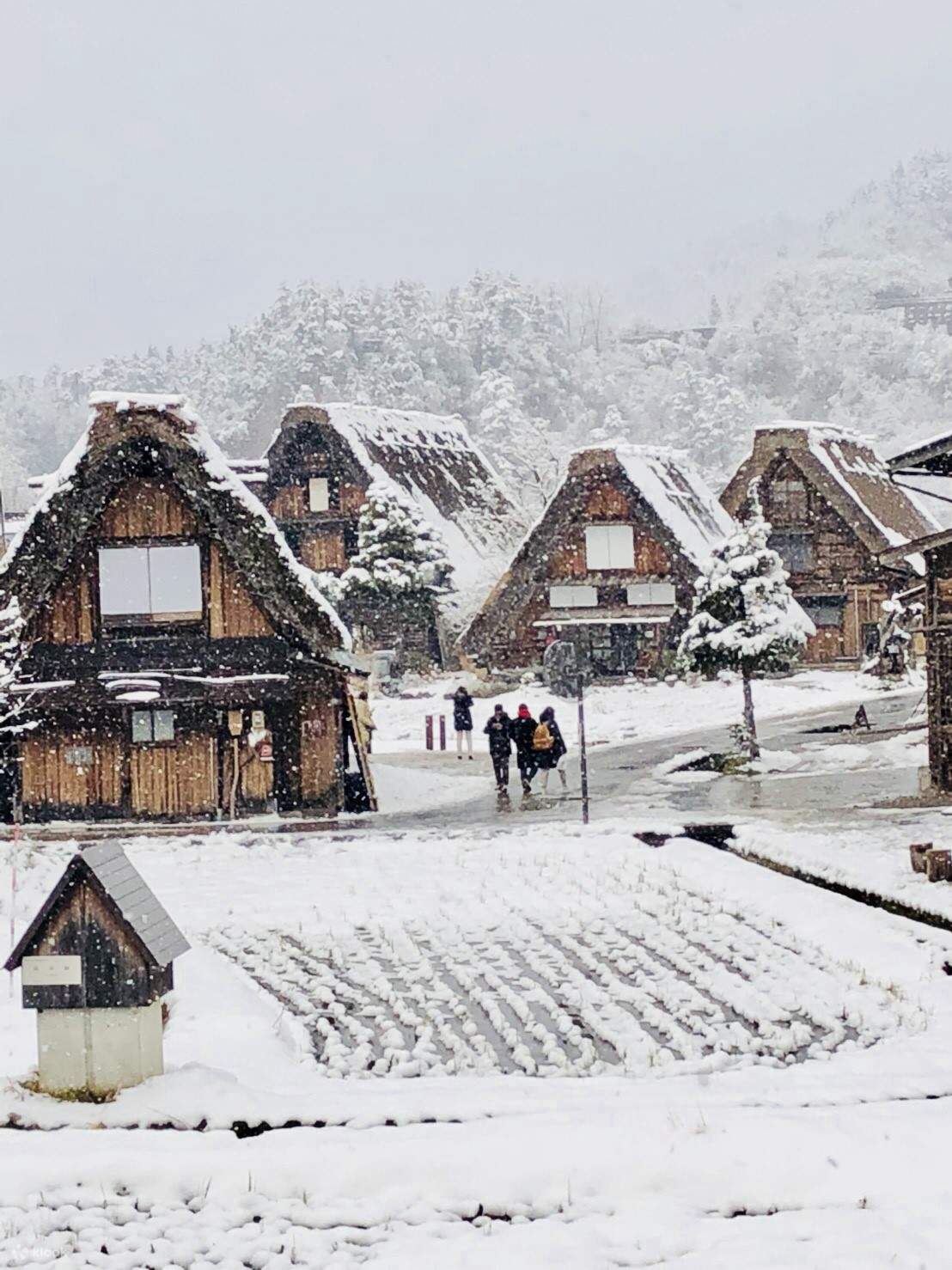
Cold, -5°C to 5°C. Heavy snowfall covers the thatched roofs.
Verdict: The best time for a visit is Tuesday to Thursday between 09:00 and 16:00 during the months of April or October.
This itinerary suits travelers making the full Kanazawa–Shirakawa-go–Takayama journey in one day, with roughly 6–7 hours between departure and final arrival. Budget around 2.5 hours for Shirakawa-go exploration plus transit windows at each end.
Board the morning highway bus from Kanazawa Station; the ride takes approximately 75 minutes through mountain scenery. Arrive at Shirakawa-go bus terminal by mid-morning.
Collect a village map from the information desk and confirm your onward departure time to Takayama. The main gassho-zukuri district lies a short walk north across the suspension bridge.
Walk the historic lanes among thatched farmhouses, visit the Wada House and observation deck for valley views, and photograph the traditional architecture. Two hours allows time to enter 2–3 houses and reach the hilltop lookout.
Choose from soba shops and cafés near the main street; most offer set meals featuring Hida beef or mountain vegetables. Service is typically quick, allowing a relaxed meal before your bus.
Board the connecting bus to Takayama; journey time is roughly 50 minutes through forested valleys. Arrive at Takayama bus terminal in early afternoon.
Drop bags at your accommodation or a coin locker, then head to the Sanmachi Suji historic district. The old town, morning markets, and Takayama Jinya are all within walking distance.
Entry to the historic streets of Shirakawa-go is free of charge. Please note that individual facilities within the village may charge their own separate entrance fees.
Verdict: Most visitors pay 0 JPY for village entry, though individual historic houses or museums may require an additional admission fee.
Shirakawa-go is accessible to visitors daily, allowing flexible planning for travelers utilizing the Kanazawa to Takayama bus route.
Complete these steps before your journey to ensure smooth travel between Kanazawa and Takayama via Shirakawa-go.
Everything you need to know about kanazawa to takayama bus timetable
Yes, reservations are highly recommended for the kanazawa to takayama bus timetable to ensure seat availability on this popular route. Booking in advance via official online platforms is suggested to avoid sold-out buses.
The direct travel time for a kanazawa to takayama bus timetable connection is approximately 2 hours and 15 minutes. Travel times may fluctuate slightly based on traffic conditions and seasonal weather.
Many travelers use the kanazawa to takayama bus timetable to include a stop at the World Heritage site of Shirakawa-go. This is a common and efficient way to explore the traditional gassho-zukuri farmhouses while traveling between the two cities.
For the most pleasant experience, aim for the 09:00–16:00 arrival window. Visiting during these hours helps avoid the peak congestion caused by large groups of day-trippers.
Yes, coin lockers are available at the Shirakawa-go Bus Terminal for your convenience. These facilities are generally accessible from 08:00 to 17:00.
The historic streets of the village are open to the public for 0 JPY. While the village itself is free, individual facilities and museums within the site may charge separate entrance fees.